

Custom environmental test chambers built around your testing process.
Ambilabs® designs custom environmental test chambers for gas, particulate, sensor, component, temperature, and humidity testing. Each system is configured around the test method, target conditions, instrumentation, sample layout, and operating sequence.
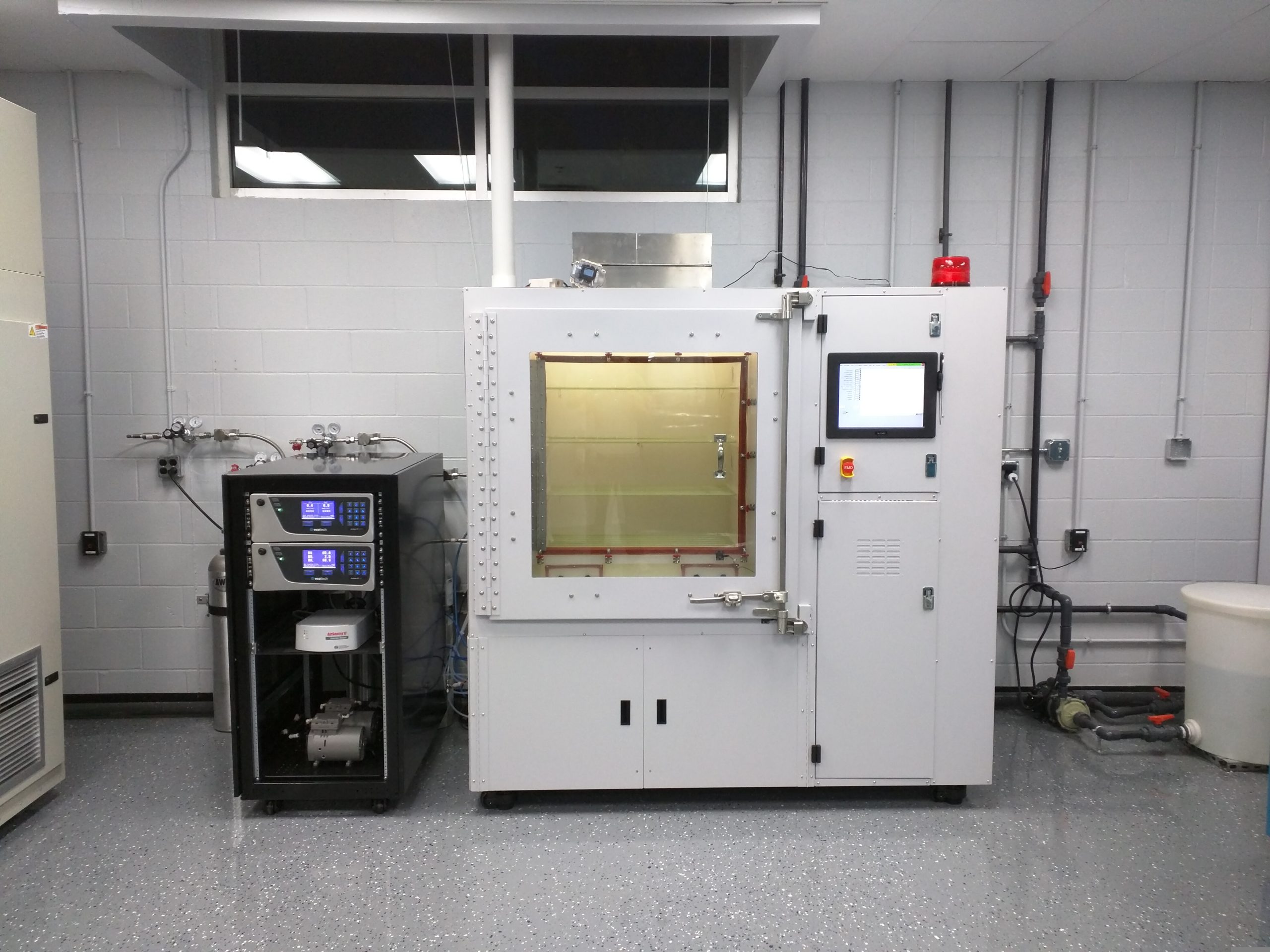
Controlled chamber systems for repeatable environmental testing.
Custom environmental test chambers help customers create, repeat, hold, and sequence controlled conditions for product testing, sensor validation, component analysis, and research.
Depending on the application, each chamber can include temperature control, humidity control, automated gas dilution, particulate generation, zero air generation, independent analytical verification, and custom mounting layouts.
Gas, particulate, and controlled-condition configurations built to your test requirements.
Every chamber project has different requirements. As a result, Ambilabs helps define the chamber layout, operating modes, environmental ranges, gas dilution needs, particulate generation options, and external analysis equipment required for the application.
Gas Sensor Test Chambers
Gas sensor applications can support controlled gas exposure, dilution, zero air supply, and analytical verification.
Particle Generation and Analysis
Particulate applications can use nebulizer-based generation, solid particulate generation, or a combination of both.
Temperature and Humidity Testing
Chambers can be configured for controlled temperature, humidity, airflow, and repeatable environmental conditions.
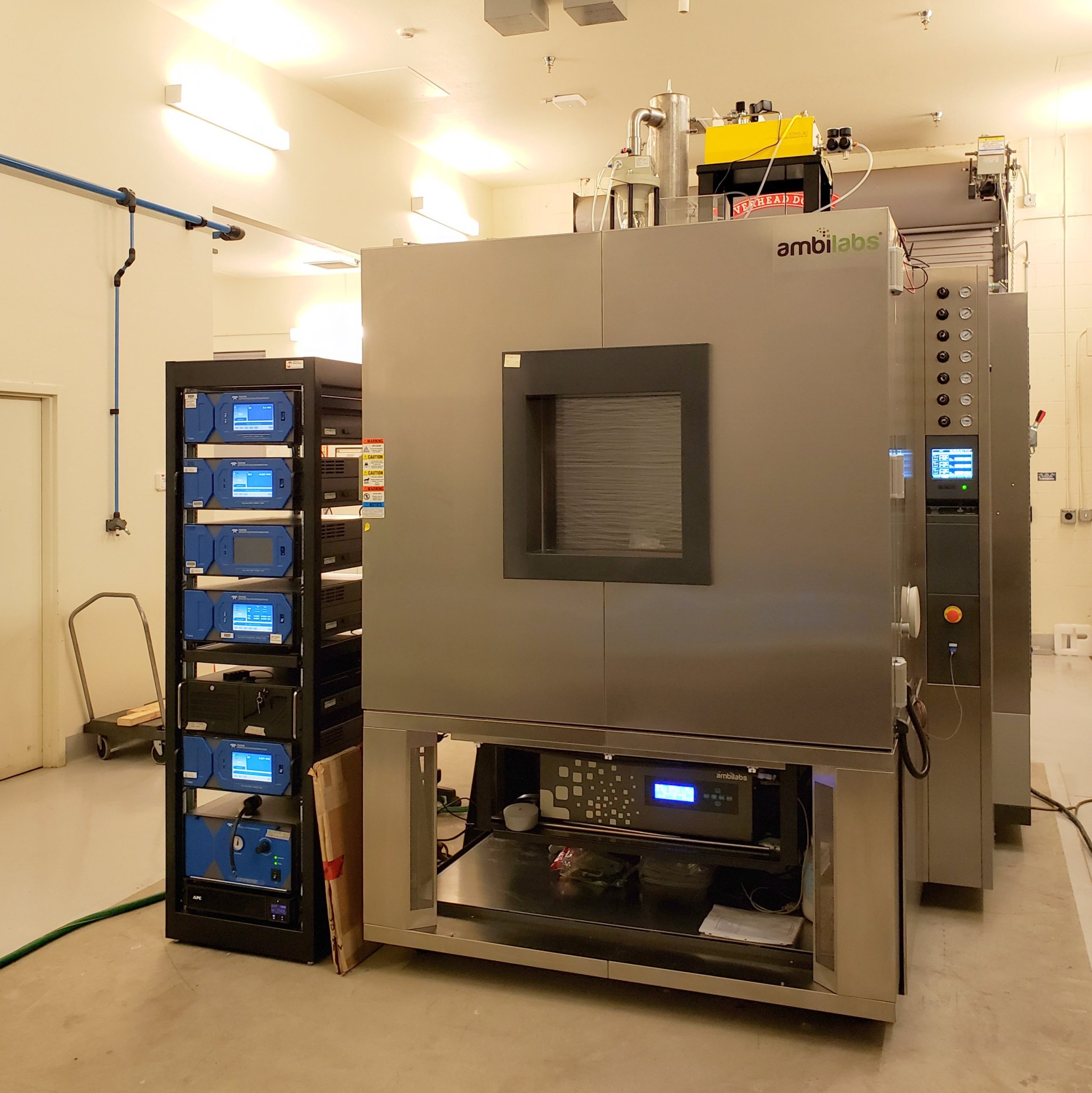
Gas sensor testing in custom environmental test chambers.
For gas sensor testing, chambers can use a smaller-volume inner drum to reduce the active air volume during testing. At the same time, the dilution system can maintain temperature-controlled zero air inside the controlled environment.
This design helps reduce temperature-related variation and supports more stable gas sensor analysis during controlled exposure testing.
Gas Testing Configuration Options
- Inner chamber drum for an optional reduced-volume test space
- Temperature-controlled zero air for stable dilution conditions
- Gas dilution design built around the chamber flow path
- Support for SO2, NOx, H2S, CO, and other target gases
- External analytical equipment for independent response verification
Particulate generation and sensor analysis.
For particulate testing, a chamber can use a nebulizer, a solid particulate dispenser, or a combination of particle generation equipment. The final setup is selected around the target material, concentration range, sensor type, and required test sequence.
Particulate Testing Configuration Options
- Nebulizer generator for aerosolized particulate testing
- Solid particulate dispenser for application-specific particle generation
- Concentration control using pulse-width modulation techniques
- Sensor comparison under repeatable chamber conditions
- System layout aligned with airflow, mounting, and analytical equipment needs
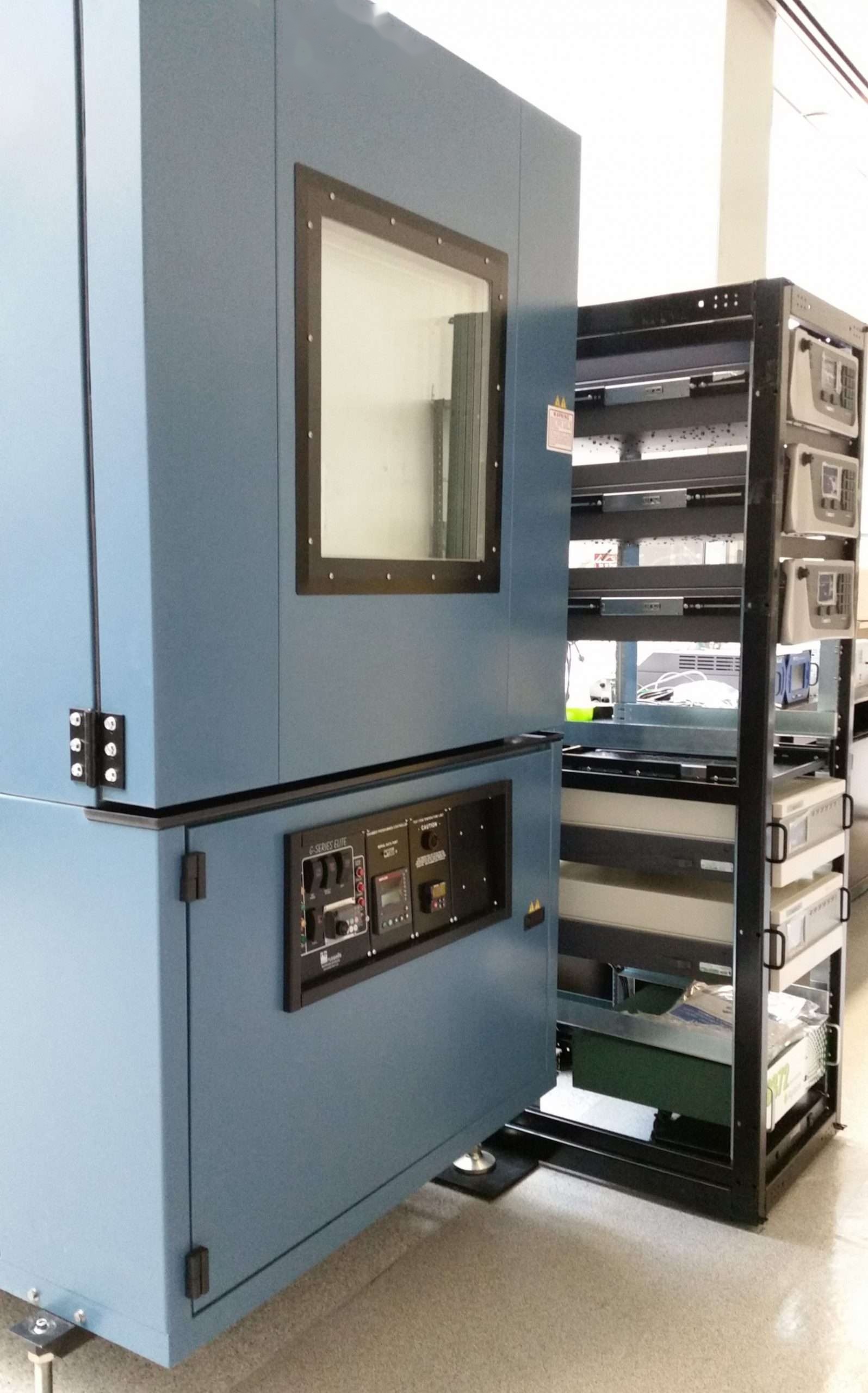
Temperature and humidity testing in custom environmental test chambers.
Every chamber includes standard temperature and humidity control as a baseline capability, independent of any gas or particulate configuration, with multi-point control for stable, repeatable conditions across a full test sequence.
A variable-speed air circulation system distributes conditioned air evenly throughout the chamber, supporting consistent results across every test cycle.
Environmental Control Configuration Options
- Humidification system with available range from 10% to 95% relative humidity
- Temperature control system with available range from -30 to 170° C
- Multi-point temperature and humidity control options
- Analog and digital communication connections
- Variable-speed air circulation options
Common features for custom environmental test chambers.
The items below are common configuration options. However, the final system design is selected after reviewing chamber size, test sequence, environmental range, gas or particulate requirements, and analytical equipment needs.
Environmental Control
Standard temperature and humidity control, multi-point monitoring, and variable-speed air circulation are included on every chamber — see Environmental Control above for full range specifications.
Integrated Testing Hardware
- Gas dilution and zero air generation systems (see Gas Testing Configuration Options above)
- Integrated particle generation systems (see Particulate Testing Configuration Options above)
- Independent gas and particulate analysis equipment for applicable test setups
- Custom sensor and component mounting platforms
How the chamber configuration process works.
Because every chamber starts with the application, Ambilabs reviews your testing goals before the system design begins.
Define the Test Objective
We review the sensor type, component type, target conditions, exposure sequence, and measurement goals.
Select Chamber Requirements
Next, we define chamber size, temperature range, humidity range, airflow needs, and sample mounting requirements.
Configure Test Systems
Then, we identify whether the chamber needs gas dilution, particle generation, zero air, external analysis, or combined operation.
Review the Layout
Finally, the chamber configuration is aligned with the test method, controls, instrumentation, and operation plan.
Designed for lab, research, industrial, and environmental testing needs.
Custom chamber systems are useful when standard equipment does not match the required test conditions, sample layout, exposure method, or measurement workflow.
Sensor Validation
Evaluate sensor performance under controlled gas, particulate, temperature, humidity, and airflow conditions.
Component Testing
Expose components, devices, or assemblies to defined environmental conditions during repeatable test sequences.
Custom Research Setups
Create project-specific test environments for studies that require specialized controls, ports, mounting, or analysis equipment.
Ready to start a test program with an Ambilabs environmental test chamber?
Contact Ambilabs to discuss chamber configuration and testing requirements, or review full specifications in the product brochure.